Regulations & Licensing
Short-term rental permit requirements: how to check yours
A permit is only one of several local checks before you list. Here's what permit rules commonly cover, and a method for finding the real rule for any address.

On this page

A short-term rental permit is the local approval to host paying guests for short stays at a specific address. In many cities, according to Airbnb's help center, hosts need to register, get a permit or obtain a license before they list or accept guests (Airbnb Help Center). So if you're asking whether you need a permit for Airbnb, the short answer is often yes, but only your local rules can say for sure.
The permit isn't the only check, though. Airbnb's US responsible-hosting page tells hosts to look up "permitting, zoning, safety, and health regulations" as well as "local taxes or business license requirements" (Airbnb Help Center).
This guide separates those layers and gives you a method for checking any address. It's general information, not legal advice, and it names no place's rules on purpose. If you're setting up a new listing, pair it with our guide to a new listing's first ninety days.
Key Takeaways
- Many US cities require a permit, license or registration before you host.
- The permit is one layer. Zoning, lodging tax and private rules such as HOA covenants or your lease are separate checks.
- Local rules often combine registration, fees, safety equipment, occupancy limits and primary-residence or day limits. The National League of Cities also recommends annual renewal, a local contact and inspections.
- Start from the exact address, read the code itself, and get the permit office's answer in writing.
- Airbnb and Vrbo ask for your number where an area requires one. Vrbo, and Airbnb for listings created through connected software, can hold a listing back until it's added.
Permit, license, registration: what the words mean
Places use different words for similar approvals, so focus on what each one takes to get and keep. Nolo says that in many cities, hosts have to "register and/or obtain a license or permit before renting their property" (Nolo). Even the definition shifts: the National League of Cities (NLC) notes, "The precise legal definition of a short-term rental varies by community" (National League of Cities).
Zoning and the permit answer different questions. Zoning decides whether short stays are allowed at the address at all; a permit or registration says that you, at that address, are approved to operate. These rules "are often part of a city's zoning or administrative codes," Airbnb notes (Airbnb Help Center). Check zoning before you apply for anything, because if it rules the address out, the rest doesn't matter.
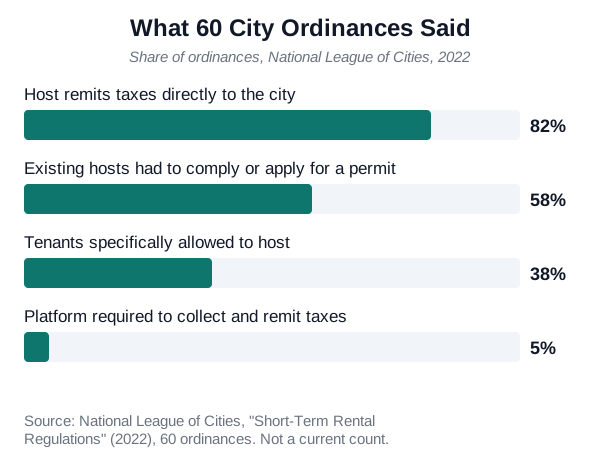
Lodging tax is a separate layer. Among the taxes that can apply to hosts, Airbnb lists "hotel/transient occupancy tax" (Airbnb Help Center). In NLC's 2022 analysis of 60 ordinances, 82 percent of the cities required the host to remit taxes directly to the city, and just 5 percent required the platform to collect and remit (National League of Cities). That's a 2022 snapshot, not a national rate.
Private rules sit on top. If you live in a condominium, cooperative or planned development, Nolo explains that covenants or bylaws "may bar short-term rentals entirely, or subject them to restrictions" (Nolo).
Renters have their own checks. Most leases restrict short-term rentals and sublets unless the landlord agrees in advance (Nolo), and in rent-controlled or stabilized housing, Airbnb warns that "there may be special rules that apply to you" (Airbnb Help Center). In NLC's 2022 analysis of 60 ordinances, only 38 percent of the cities specifically allowed tenants to host (National League of Cities).
Each layer answers a different question, and each has its own place to look:
- Jurisdiction. Who decides: City, county or both. What it answers: Whose rules apply here? Where to look: County property record, city limits map.
- Zoning. Who decides: Local government. What it answers: Is a short stay allowed here at all? Where to look: Zoning map, code of ordinances.
- Permit or registration. Who decides: Local permit office. What it answers: Are you approved to operate? Where to look: Permit office page, fee schedule.
- Tax registration. Who decides: Tax authorities. What it answers: Who collects and remits lodging tax? Where to look: State and local tax agency, platform tax pages.
- Private rules. Who decides: HOA, condo board, landlord, insurer. What it answers: Does a contract say no? Where to look: Covenants, bylaws, lease, insurance policy.
What permit rules and applications commonly cover
Rules and applications differ from place to place, but the same parts keep coming back. Local regulations generally "include some combination of" provisions such as registration, primary-residence rules, day limits, occupancy limits, and health and safety rules, according to NLC's guide (National League of Cities). A late-September 2026 industry briefing shows new and proposed local rules built from the same parts (yearly permits, smoke and carbon monoxide detectors, posted exit routes, 24-hour local contacts and inspections), plus a minimum-night rule (Strisker).
The list below is what comes up often. Your own code decides which parts apply. If your area sets a minimum stay, our guide to minimum stay settings covers the pricing side.
- Registration. Cities can require hosts to register their properties, and can require platforms such as Airbnb and Vrbo to make sure listed properties are properly registered (National League of Cities).
- Fees and renewal. As Nolo puts it, "To register, the host must often pay various fees" (Nolo). NLC recommends that cities "set an annual permit reapplication" and keep fees "reasonable and tied to the cost of administering the permit program" (NLC). Fees vary, so find your area's current fee schedule and budget for inspection fixes and renewal too.
- A local contact. The same guide recommends requiring hosts "to list a local contact who can be reached should an issue arise" (NLC). Our guest noise complaint protocol covers what that person should do when a neighbor complains.
- Occupancy limits. Cities can limit guests per stay, "usually by establishing a guests-per-bedroom or per-property cap" (NLC).
- Primary residence and day limits. Some places require the host to live there most of the year, or the rental to be in or part of the owner's primary residence. Some cap the days per year you can rent (NLC).
- Safety equipment and inspection. Cities can require fire safety equipment, carbon monoxide detectors, emergency information displayed for guests and emergency plans (NLC). NLC's guide also recommends inspections, or at least a city right to inspect.
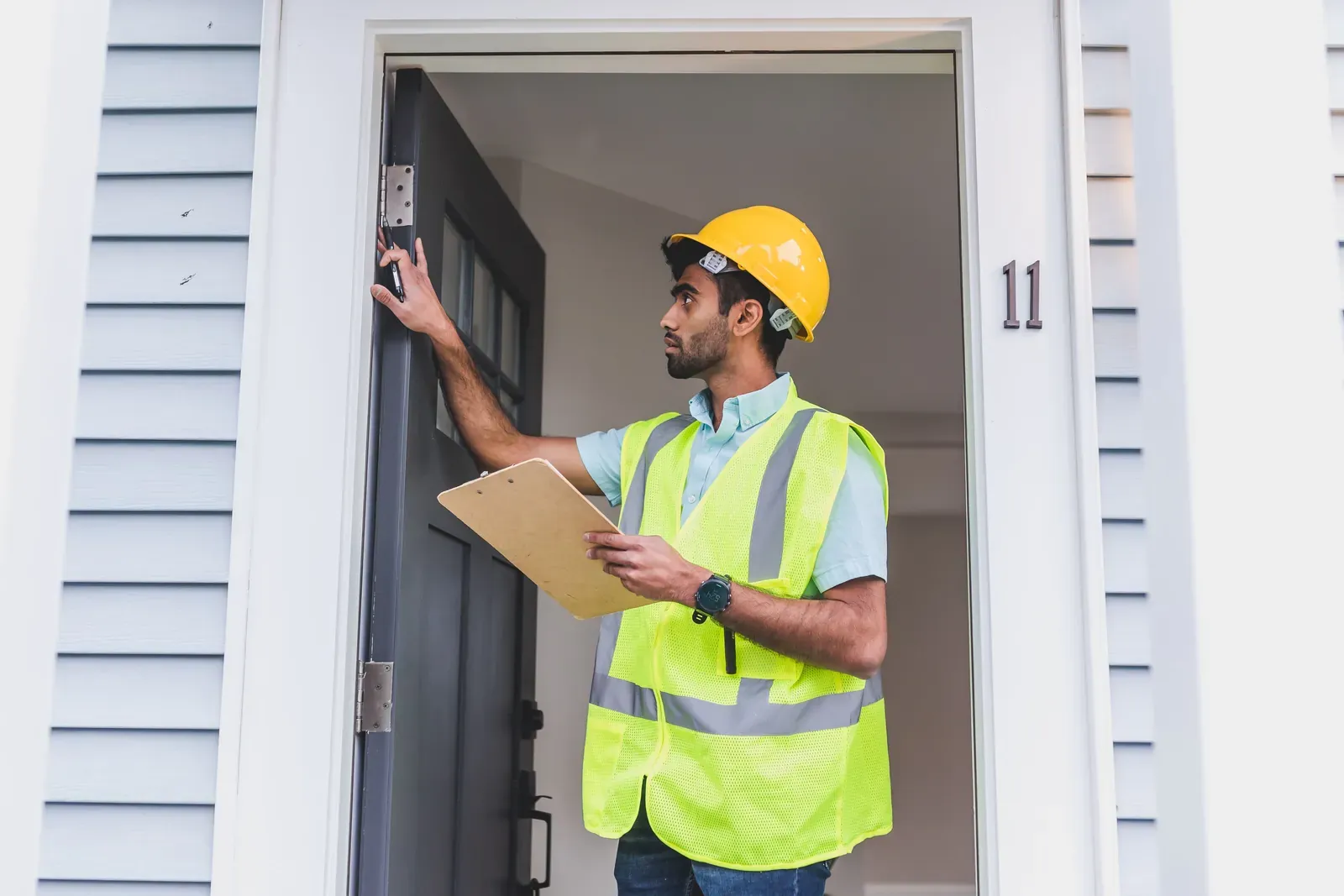
For a baseline, NFPA's fire-safety guidance recommends smoke alarms "in every sleeping room and outside each separate sleeping area," plus alarms on every level of the home (NFPA). The U.S. Fire Administration recommends CO alarms "in a central location outside each separate sleeping area and on every level of your home" (U.S. Fire Administration). The CPSC notes that many states and local jurisdictions now require CO alarms in residences, and suggests asking your local building code official what applies where you are (CPSC). Inspection checklists commonly look at items like these, but your local code decides what's actually required.
The documents worth gathering before you start
None of these items is universal, and your application form is the final list. Gather what applies to you.
- The exact address and parcel number from the county property record.
- If you rent, your landlord's written permission, since most leases restrict short-term rentals and sublets without it (Nolo).
- Your HOA covenants, condo bylaws or co-op rules, with the rental sections marked (Nolo).
- Your insurance policy, reviewed with your agent or carrier for liability coverage and property protection (Airbnb Help Center).
- A log of where each smoke and CO alarm is and when you last tested it. Test smoke alarms at least once a month, as NFPA recommends (NFPA).
- A local contact's name and phone number.
- Your lodging tax account details, or a note of which taxes your platform collects (Airbnb Help Center).
- Proof of primary residence, if your code requires it.
How to check whether your address needs a short-term rental permit
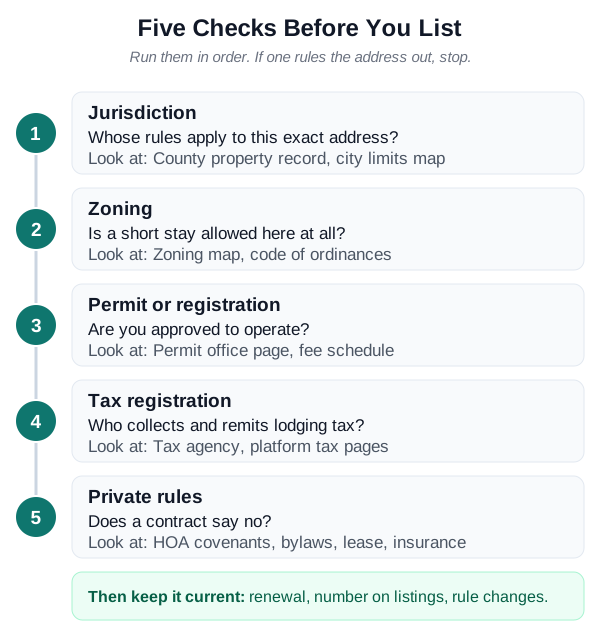
Start from the exact address, not the city name. One investor in an older BiggerPockets thread on short-term rental laws put it this way: "you need to know specifically what jurisdiction the property is in. County and or city or both." The five steps below follow the diagram's order.
Step 1: Confirm whose rules apply to the address
Look up the address in your county's property or tax record and note which government it lists. If your city publishes a city limits map, check the address against it too.
Step 2: Read the rental and zoning rules in the code
Find that jurisdiction's code of ordinances and read the relevant sections yourself. The Library of Congress says, "A large number of current municipal codes are freely available online via several publishers' websites," though no single site has them all (Library of Congress). Publishers include Municode, which says it has helped connect over 4,300 local governments with their communities, and American Legal Publishing. Failing that, try the municipality's website or clerk's office (Library of Congress).
Labels vary, so search several terms: "short-term rental," "transient," "vacation rental," "tourist home," "bed and breakfast" and "homestay." Read the definitions and zoning sections too. As long as it doesn't conflict with state law, a local ordinance carries the "force and effect of law" (Library of Congress), so treat summaries, this one included, as pointers to the code.
If the code doesn't mention short stays at all, take that as a question for the permit office, not an answer. As another post in the same BiggerPockets thread on short-term rental laws cautions, "if there are no regulations currently on the books - that can change at any time."
Step 3: Find the permit office and ask your question in writing
If the code allows short stays at your address, find the office that runs the permit and save its application, fee schedule and renewal terms. Use the current schedule rather than a figure from a forum, then run the first fee, inspection fixes and renewal through the break-even occupancy calculator.
Then email the office one narrow question and keep the reply, because a phone answer leaves no record. As one investor in an older BiggerPockets thread on finding local regulations warned, "You can call but they don't always give the right answer. You never want to be in a, 'Betty told me it was good on the phone' situation!" A short email like this covers it:
Subject: Short-term rental question for [address], parcel [number]. Message: I'm considering hosting guests at [address] for stays of [length]. I've read [code section]. Is this use allowed at this address, and which permit or registration applies?
Step 4: Check who collects lodging tax
Look at each platform's tax pages to see which taxes it collects for your listing. If there isn't a section for local tax collection under Taxes, Airbnb doesn't automatically collect and pay on your behalf for that listing (Airbnb Help Center). Even where it does collect, hosts "are responsible for assessing all other tax obligations, including state and city jurisdictions" (Airbnb Help Center). Vrbo likewise says hosts are responsible for collecting and remitting lodging taxes when Vrbo isn't liable to do so (Vrbo Help).
Step 5: Read your HOA documents, lease and insurance policy
Airbnb tells US hosts to check HOA or co-op board rules "to make sure there is no prohibition against subletting" (Airbnb Help Center). The same page tells hosts to read the lease, check with the landlord if that applies, and review the homeowner's or renter's policy with an insurance agent or carrier. Covenants and leases can bar short stays on their own (Nolo), so a yes from the city doesn't settle them.
Your permit or registration number on Airbnb and Vrbo
Airbnb and Vrbo ask for your permit or short-term rental (STR) registration number in areas that require one. Hosts "may be required to add their rental permit to their Airbnb listing or to claim an exemption," according to Airbnb's help page (Airbnb Help Center).
On Airbnb's desktop site, the help page's path is: click Listings and select the listing, click Settings in the Listing editor, then click Regulations under Edit preferences and complete the information (Airbnb Help Center). It doesn't give steps for the mobile app. On Vrbo, select the listing, choose Local laws, review the Regulatory Compliance section, use the Update Regulatory Compliance link, then select Edit registration (Vrbo Help).
For listings created through software connections, Airbnb says that where it requires city registration, listings "won't be published until the Host completes the registration process for each listing" (Airbnb Help Center). Vrbo marks the registration form incomplete "before the listing can go live" where registration is mandatory (Vrbo Help).
Some areas also want the number on every ad. Vrbo notes that tourism laws in certain areas may require hosts to display it "on any advertisement, including your listing on our platform" (Vrbo Help), and recommends its dedicated field over your property description (Vrbo Help). When the permit renews or the number changes, update it in the same place.
When rules change after you're approved
Getting a permit doesn't freeze the rules. When a city adopts new rules, they can cover hosts who were already operating. In NLC's 2022 analysis of 60 ordinances, 58 percent of the cities required existing hosts to comply with the regulations or apply for a permit or license (National League of Cities).
Plan to check again at every renewal: put the date in your calendar and reread your code section before you renew. One investor in the BiggerPockets thread on finding local regulations suggests you "look for news about meetings," so sign up for your council's agenda emails. Keep a compliance folder with your permit, the code section you relied on, the office's emails and your inspection results.
Your next step
A short-term rental permit sits inside a stack of checks: jurisdiction, zoning, the permit itself, lodging tax and private rules, then the upkeep that keeps it current. Start with three moves: look up your address in the county property record, find the short-term rental section of that jurisdiction's code, and email the permit office one specific question about your setup. Then budget the fees with the break-even occupancy calculator.
Common questions
Do I need a permit if I only rent a room in my own home?
It depends on your code, so don't assume a room in your own home is exempt. The National League of Cities notes that some places require the rental to be in or part of the owner's primary residence. Check whether your code treats a hosted room differently from a whole-home rental, and remember that HOA rules and your lease still apply.
Is a business license the same as a short-term rental permit?
Not necessarily. On Airbnb's US hosting page, "local taxes or business license requirements" appear as a separate item from permitting and zoning rules, so the two can be different things. When you email the permit office, ask which licenses, permits and tax registrations apply to your address.
Do I need a permit for stays of 30 nights or more?
It depends on how your code defines a short-term rental, and NLC notes that the definition varies by community. Look in the code's definitions section for the length of stay it uses to draw the line, if it sets one. If your stays fall outside it, ask the permit office to confirm that in writing.
What happens if I list without one?
Penalties "may include fines or other enforcement," according to Airbnb's help center. Where registration is mandatory, Vrbo marks the form incomplete until you add your number, and Airbnb won't publish listings created through connected software until registration is complete. The details depend on your local rules, so check them before you list.